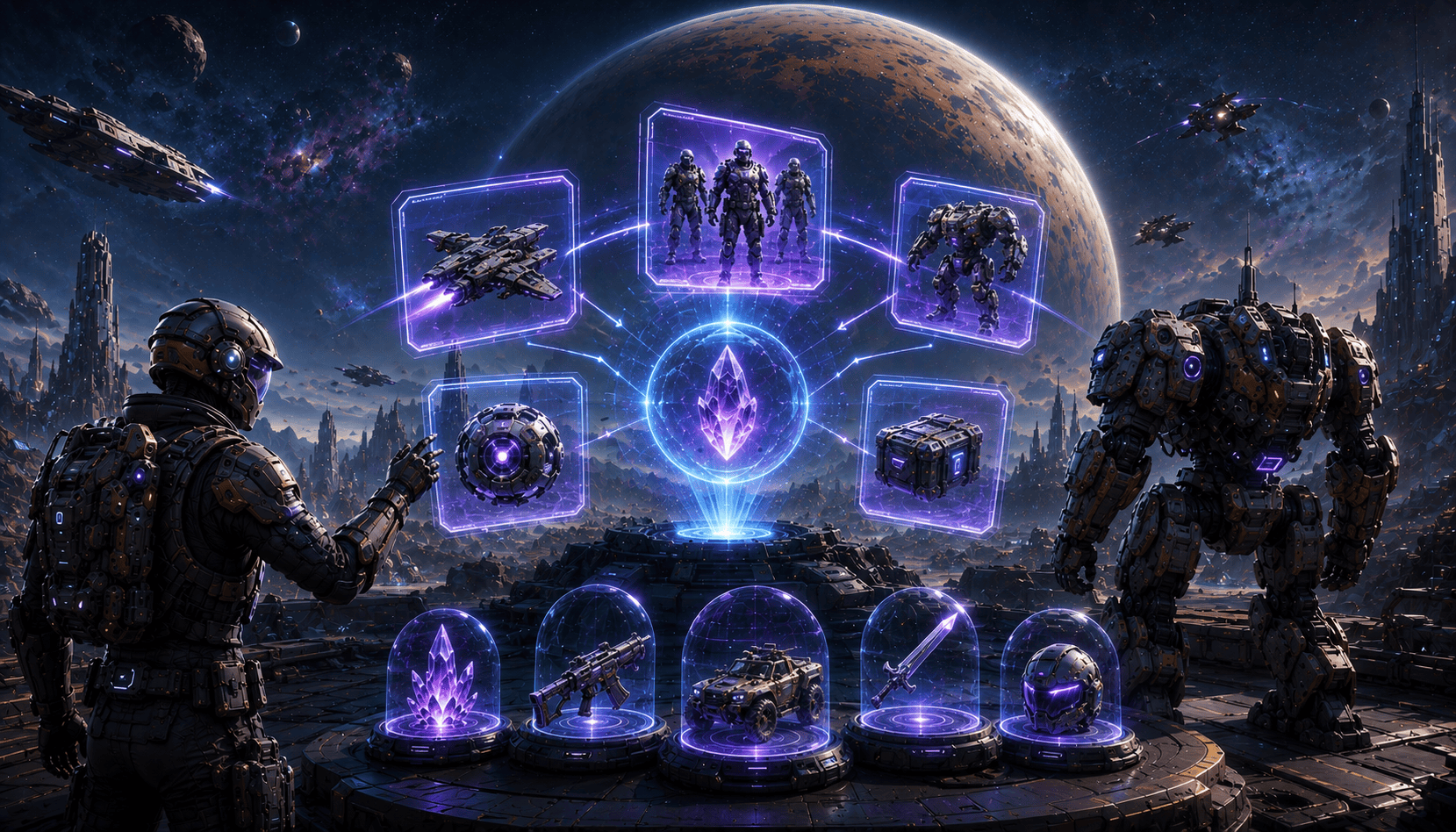
How Genesis NFTs Became the Foundation of Phantom Galaxies
Phantom Galaxies introduced its Genesis NFT ecosystem as a core part of the project’s long-term vision for digital ownership and player-driven progression. Rather than treating NFTs as simple cosmetic collectibles, the game integrated them directly into gameplay systems, rewards, progression mechanics, and the wider economy of its sci-fi universe.
Built by Blowfish Studios and supported by Animoca Brands, Phantom Galaxies combines cinematic mech combat with blockchain infrastructure designed to support ownership of planets, starfighters, avatars, posters, and other digital assets. Genesis NFTs became one of the earliest gateways into the ecosystem, rewarding active community participation while establishing long-term utility for holders.
The project’s NFT structure was intentionally layered. Some Genesis NFTs provided early game access, while others unlocked presale opportunities, collectible assets, or future ASTRAFER token rewards. This interconnected design helped create a stronger relationship between gameplay activity and blockchain ownership.
Official Phantom Galaxies announcements described Genesis NFTs as part of a broader ecosystem where players could earn rewards, unlock rare collectibles, and participate in the game’s future development. :contentReference[oaicite:0]{index=0}
Unlike many early NFT projects that focused almost entirely on speculative trading, Phantom Galaxies aimed to build utility around every major collectible category. This strategy became one of the reasons the project attracted both traditional gamers and Web3-native communities.
The Different Types of Genesis NFTs
The Genesis NFT ecosystem in Phantom Galaxies includes several interconnected asset categories. Each type serves a specific purpose inside the game universe, and many NFTs become more valuable when combined with other collectibles.
One of the earliest and most recognizable NFT categories was the Origin Collection Posters. These NFTs were tied directly to Alpha Episodes and mission progression. Players could purchase posters, complete in-game Episodes, and then redeem the NFTs for upgraded versions connected to gameplay achievements.
The process created a progression-based ownership system:
- Players purchased Origin Collection Poster NFTs
- Episodes were completed in-game
- Completion Badges were attached to NFTs
- Posters could then be redeemed for Episode Medals
- Full NFT collections unlocked additional rewards
According to official Phantom Galaxies guides, complete sets of redeemed and unredeemed posters, together with Episode Medals, could unlock exclusive collectible assets including Pristine Fleet Starfighters and special Avatar NFTs. :contentReference[oaicite:1]{index=1}
Genesis Starfighters also became central to the ecosystem. These transformable mech vehicles function as both gameplay assets and collectible NFTs. Players use them throughout missions, exploration, PvE combat, and future multiplayer activities.
The game’s Planet Genesis NFTs expanded the system even further. These NFTs represent planets and asteroids located throughout the Phantom Galaxies universe. Each planet includes unique coordinates, randomized traits, and future utility tied to governance systems, construction mechanics, and token emissions. :contentReference[oaicite:2]{index=2}
Official sale materials emphasized that planets were designed as functional in-game infrastructure rather than passive collectibles. Planet holders may eventually build marketplaces, hangars, refineries, and residential hubs capable of supporting organizations and guilds inside the game world. :contentReference[oaicite:3]{index=3}
The Role of ASTRAFER and NFT Utility
One of the most important aspects of the Genesis NFT ecosystem is its connection to ASTRAFER, the official governance and utility token of Phantom Galaxies. The token was introduced as part of the project’s broader Web3 infrastructure and became closely connected to NFT ownership.
Official project announcements confirmed that Planet Genesis NFTs would generate ASTRAFER emissions tied to gameplay engagement and planetary activity. Players who actively developed their planets and participated in the ecosystem could potentially increase their token rewards through gameplay progression rather than passive ownership alone. :contentReference[oaicite:4]{index=4}
This “gameplay-first” philosophy became one of the defining characteristics of Phantom Galaxies. Instead of separating NFTs from gameplay, the project integrated blockchain assets into exploration, progression, and community interaction.
Genesis NFTs also became closely tied to live in-game events. During the Astrafite Rush play-and-earn competition, holders of Planet Genesis Mintpass NFTs received reward multipliers tied to ASTRAFER distribution. :contentReference[oaicite:5]{index=5}
The growing NFT ecosystem introduced several important gameplay and economic functions:
- Access to exclusive collectible assets
- Participation in governance systems
- Potential ASTRAFER token emissions
- Ownership of planetary infrastructure
- Progression-based NFT upgrades
As the game evolved, Phantom Galaxies also introduced generative Planet NFT minting systems. Holders of Planet Mintpasses could mint fully generated planets with randomized traits influenced by Planet Catalyst NFTs. These catalysts allowed players to shape certain characteristics of their planets before minting. :contentReference[oaicite:6]{index=6}
The minting process reinforced the project’s focus on customization and scarcity. Every generated planet became a unique blockchain asset tied to the expanding Phantom Galaxies universe.
Why Genesis NFTs Matter for the Future of Web3 Gaming
The Genesis NFT structure inside Phantom Galaxies reflects a broader shift happening across the gaming industry. Blockchain gaming projects increasingly aim to create persistent online worlds where digital ownership extends beyond cosmetic items and becomes integrated directly into gameplay systems.
Phantom Galaxies positioned itself differently from many early NFT games by emphasizing production quality and gameplay depth alongside blockchain functionality. Cinematic mech combat, multiplayer exploration, and RPG progression systems remain central to the experience, while NFTs function as extensions of the game world itself.
This hybrid approach helped the project attract players who may not normally engage with blockchain gaming. Traditional gamers can still experience the action RPG systems, while NFT holders gain access to additional ownership mechanics and ecosystem participation.
The Genesis NFT ecosystem also supports long-term community engagement. Instead of isolated one-time purchases, many NFTs connect to future unlocks, progression systems, and upcoming gameplay mechanics. This encourages players to remain active as the Phantom Galaxies universe expands.
Community interest continues to focus heavily on future NFT utility, planetary governance systems, and ASTRAFER integration. Official statements suggest that planets, starfighters, avatars, and governance mechanics will become increasingly connected as the project develops further. :contentReference[oaicite:7]{index=7}
Today, Genesis NFTs remain one of the most important pillars of the Phantom Galaxies ecosystem. They represent more than digital collectibles — they are part of a growing attempt to combine AAA-quality gaming with persistent digital ownership and player-driven online economies.
As Web3 gaming continues evolving, Phantom Galaxies Genesis NFTs stand as an example of how blockchain assets can become meaningful components of a living multiplayer universe rather than standalone speculative items.