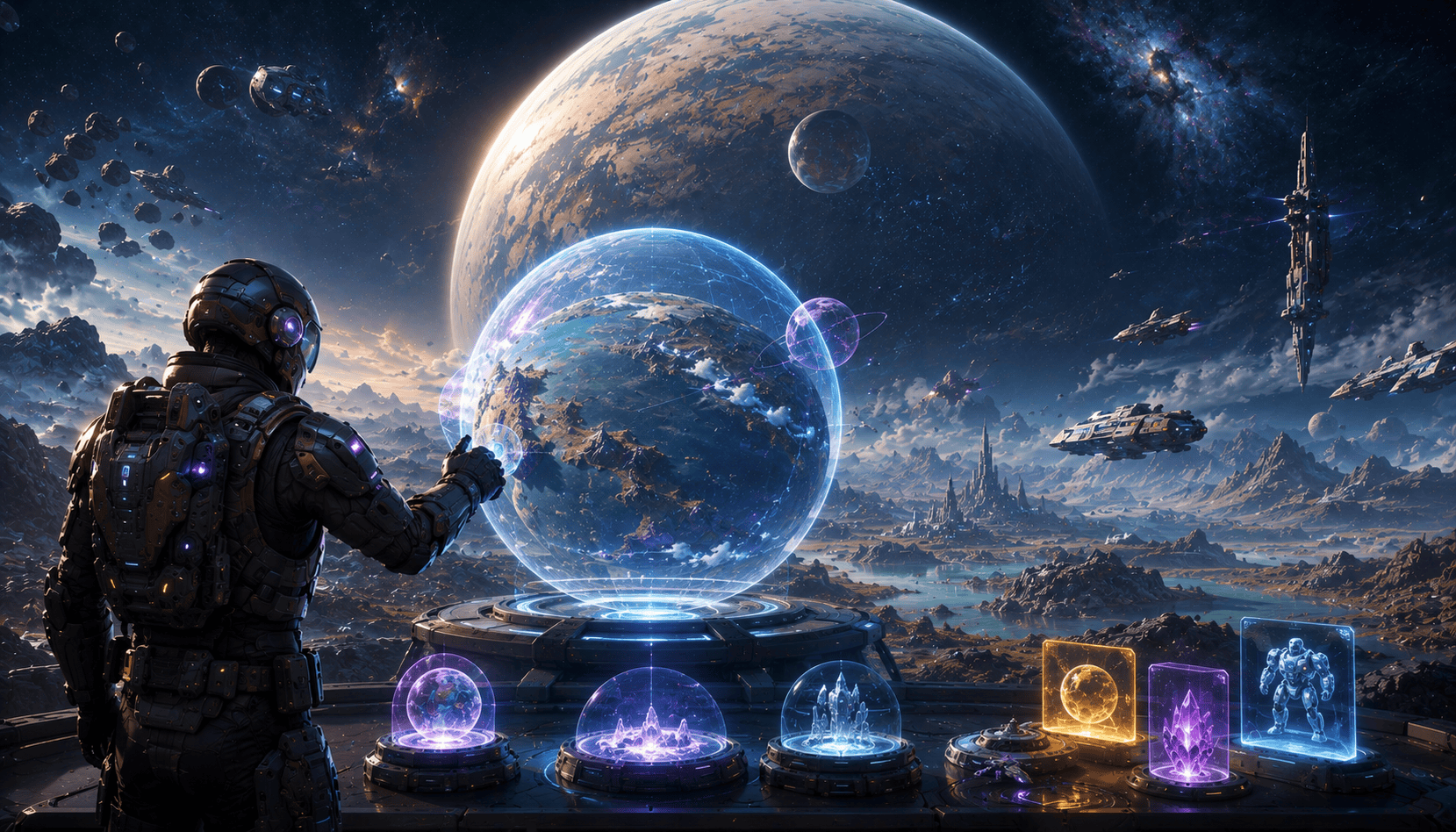
The Beginning of Planet Ownership in Phantom Galaxies
The Phantom Galaxies Planet Sale became one of the defining moments in the project’s history, introducing large-scale NFT land ownership into the game’s expanding sci-fi universe. More than a standard digital collectible launch, the sale represented the foundation of a player-owned economy inside one of the most ambitious Web3 gaming projects currently in development.
Developed by Blowfish Studios and supported by Animoca Brands, Phantom Galaxies combines AAA-style space combat with blockchain infrastructure. The Planet Sale expanded this vision by allowing players to purchase unique Planet Genesis NFTs tied directly to locations inside the game universe.
Each planet sold during the event featured unique coordinates and randomized traits, making every NFT distinct. According to official project details, owners would eventually gain access to governance systems, construction mechanics, marketplaces, hangars, and other in-game utilities connected to planetary ownership. :contentReference[oaicite:0]{index=0}
The sale immediately attracted major attention across the blockchain gaming industry. The private phase alone generated approximately US$19.3 million and sold more than 7,700 Planets and Asteroids, demonstrating strong early demand for digital real estate within the Phantom Galaxies ecosystem. :contentReference[oaicite:1]{index=1}
At a time when many blockchain games focused primarily on speculation, Phantom Galaxies positioned its planets as gameplay-oriented assets designed to integrate directly into the evolving multiplayer universe.
How the Phantom Galaxies Planet Sale Worked
The Planet Sale was divided into several stages, including private sales, presales, and a public release. Access to early presale rounds depended on ownership of specific Phantom Galaxies NFTs, rewarding active community members and early supporters.
Players could purchase planets through multiple channels, including the official Phantom Galaxies website, Forj Launchpad, and selected OpenSea auctions. Public sale events officially began in May 2022 and offered several categories of planetary NFTs ranging from small asteroids to large planets. :contentReference[oaicite:2]{index=2}
The project introduced different planet sizes with varying levels of utility and player capacity. Larger planets were expected to support more extensive infrastructure and larger communities inside the game universe.
Planet NFTs included several planned gameplay functions:
- Generation of ASTRAFER token emissions
- Construction of marketplaces and hangars
- Guild housing and organizational systems
- Planet governance mechanics
- Resource and refinery infrastructure
One of the more innovative aspects of the sale was the way ASTRAFER token rewards were connected to gameplay activity instead of passive holding alone. Official project documentation explained that players could increase their token emissions by actively developing planets, completing missions, and encouraging player interaction within their sectors. :contentReference[oaicite:3]{index=3}
This “gameplay-first” approach separated Phantom Galaxies from many early Web3 projects that focused primarily on speculative token trading. The developers emphasized active participation and long-term ecosystem growth over short-term token distribution.
The sale also introduced the idea of governance flexibility. Planet owners could potentially determine how their territories operated, including leadership styles and economic structures. Some planets could function as community hubs, while others might become private organizational territories controlled by guilds or alliances.
Why Planet NFTs Became Important in Web3 Gaming
The Phantom Galaxies Planet Sale reflected a larger shift happening across the gaming industry. Digital ownership was evolving from cosmetic collectibles into fully integrated gameplay systems tied directly to online worlds and virtual economies.
Unlike traditional online games where players never truly own in-game property, blockchain technology allowed Phantom Galaxies users to hold verifiable ownership of planets recorded on the Polygon network. This meant players could potentially trade, develop, rent, or manage their digital territories independently.
The idea attracted both gamers and NFT collectors. Some participants viewed planets as long-term strategic assets tied to future gameplay systems, while others saw them as collectible pieces of an expanding sci-fi metaverse.
Several factors helped increase interest in the Planet Sale:
- AAA-inspired gameplay and visuals
- Limited NFT supply and rarity
- Planned ASTRAFER token utility
- Future governance and infrastructure systems
- Strong backing from Animoca Brands
The project’s accessibility also played an important role. Phantom Galaxies aimed to appeal to both traditional gamers and blockchain-native audiences. Players could still experience core gameplay without necessarily participating in NFT ownership, while collectors gained access to deeper ecosystem mechanics.
Community excitement surrounding the Planet Sale extended beyond the initial launch. Secondary marketplaces quickly became active as users traded mint passes, presale tickets, and Planet Genesis NFTs. OpenSea listings for Phantom Galaxies assets showed continued activity following the public sale launch. :contentReference[oaicite:4]{index=4}
At the same time, community discussions focused heavily on future gameplay implications. Players speculated about planetary development systems, resource economies, guild warfare, and the long-term role of ASTRAFER inside the ecosystem.
The Future of Planet Ownership in Phantom Galaxies
The Planet Sale established the foundation for one of Phantom Galaxies’ most important long-term systems: player-driven infrastructure inside a persistent online universe. Rather than limiting ownership to cosmetic NFTs, the game introduced assets designed to influence gameplay, economy, and social interaction.
As the Phantom Galaxies universe continues to expand, planets may become increasingly important to multiplayer organization, resource production, and regional governance. The project’s roadmap suggests that planetary systems will play a central role in future updates and large-scale online interactions.
For many Web3 gaming enthusiasts, the Planet Sale represented an early example of how blockchain ownership could integrate naturally into a high-quality multiplayer experience. Instead of replacing gameplay, NFTs became extensions of the game world itself.
The long-term success of the system will depend on continued development, player engagement, and the growth of the broader Phantom Galaxies ecosystem. However, the original Planet Sale already demonstrated that there is strong interest in combining digital ownership with immersive sci-fi gameplay.
Today, the Phantom Galaxies Planet Sale remains one of the project’s most important milestones — not only because of its financial success, but because it helped define how ownership, exploration, and community-building could function inside the next generation of online gaming worlds.